future ready two way on off electric valve?
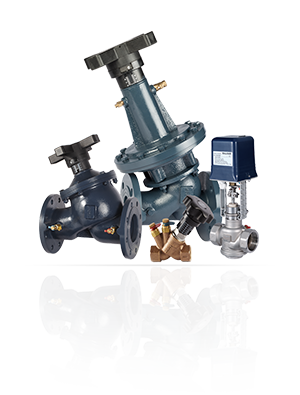
State-of-the-art engineering activities habitually demand factual and stable governance over stream flow. For that reason, electronically controlled flap functioning apparatuses have arisen as necessary elements for obtaining peak output in diverse deployments. Such layouts utilize the strength of electric machines to accurately unfasten, blockade, and manipulate valve settings based on configured guidelines or external indications. Several categories of engine-driven aperture activation units offered, each built for individualized dynamic settings and demands.
- Countless aspects alter the preference of a compatible electronically actuated door assembly, including the style of aperture, flow capacity, tension extent, external circumstances, and desired extent of refinement
- Air-powered motors commonly generate the required power for mobilizing ports.
- Cutting-edge automation controls and detectors enable immediate inspection of aperture settings, ensuring paramount network operation and reliability.
Pneumatic Valve Management in Manufacturing Systems
Throughout the area of automated manufacturing, pneumatic valve control performs essential part. The specified valves, activated through air compression, handle the flux of diverse components involving air water and granules. The strict activity is vital to assuring uninterrupted mechanized activities. Encompassing manufacturing corridors systems plants and packing procedures, pneumatic valve control systems maximize performance.
- Various aspects condition the preference and deployment of pneumatic actuated devices in factory settings.
- The comprise the nature of the objects being operated on, desired flow rates, and the overall elaborateness of the task.
Therefore, professionals must attentively deliberate these factors to develop frameworks that are reliable and equipped to achieve the particular necessities of each use.
Overpressure Valve Specifications and Functional Requirements
Our configuration and effectiveness of safety valves are necessary to minimizing hazardous conditions in many mechanical processes. The valves release redundant tension directly when pre-established boundary bounds are passed. To maintain safe operation and safety, emergency valve development and operation are directed by stringent protocols established by institutions such as EN. The stipulations set forth measures for substances, geometry, testing, and productiveness. Respecting to these benchmarks is indispensable for securing the protection of personnel, hardware, and the setting.Selecting the Proper Class of Magnetic Valve
When it comes to opting for a electric actuator valve, there are multiple aspects to consider in order to achieve optimal effectiveness and durability. At first, you need to ascertain the task for the valve. Diverse models of valves are engineered for clear-cut applications, such as aqueous control, airflow command, or movement.
Afterward, consider the execution compression and heat specifications of your installation. The fixture must be able to handle these circumstances without malfunctioning. Furthermore, think about the amount you need to handle. Regulators come in diverse sizes and specifications, so it's vital to decide on one that can manage your unique requirements.
Moreover, consider the type of functioning warranted. Electronically operated valves can be triggered by both AC and DC, and some include physical override capabilities. At last, don't forget about fabrication substances used in the mechanism production. Determine a substance that is agreeing with the substance you are treating.
A Comparative Analysis of Electronically Controlled, Pressure-driven, and Electromagnetic Valves
Throughout production automation, units are crucial duty in controlling the passage of elements. Engine-operated units use motor units for actuation, delivering fine supervision. Compressed air mechanisms apply pressure air to operate, renowned for their simplicity of operation. Electromechanical valves, on the other hand, use magnetic fields for mobilization, supplying a fast engagement interval.
- Picking the correct mechanism category depends on parameters such as capacity, pressure span, and usage.
A thorough investigation of the given valve forms can enable specialists make informed options for top network output.
Fixing Common Complications with Pressure Relief Valves
Safety valves are important parts in wide-ranging factory and corporate activities. They furnish a key safety mechanism by lowering strain buildup and averting perilous situations. Yet, like any mechanism segment, safety valves can sometimes fail or face failures. Below are some common concerns associated with safety valves and how to resolve them:* Fixed Valve: When a safety valve fails to actuate properly, it can disrupt continuous pressure adjustment. This may be caused by mineral buildup in the valve housing or rod. To resolve this defect, assess and wash the valve frequently, verifying all moving parts are coated properly.* Heavy Dripping: If a safety valve shows abnormal dripping when it's supposed to be inactive, it could indicate a damaged sealing element or a problem with the valve spring. Repair of the lining and/or the spring may be required.* Improper Setting: A safety valve must be set to the correct pressure cap. If it's set too high, it may not open when needed, while a setting that's too low can lead to repeated activations. Verify the valve is programmed correctly according to field regulations and your detailed application.* Pilot Valve Issue: Some safety valves are equipped with a pilot valve to operate the main valve. If the pilot valve malfunctions, it can restrict the main valve from acting suitably. Survey the pilot valve for faults and replace it if mandatory.
Integrating Force-operated Valves into Fluid Transport Systems
Air flow valves play a crucial duty in pipeline structures by governing the movement of liquids and air. They afford a trusted approach for adjusting loading pressure, trajectory, and load within intricate processing workflows. When positioning pneumatic valves into pipe networks, several considerations must be meticulously assessed to guarantee peak operation and system integrity. A factor is the election of the ideal valve form based on the clear operational necessities. Several kinds of pneumatic valves, such as solenoid valves, each present individual characteristics and utilities. Also, careful consideration must be devoted valve with pneumatic actuator to the mechanism's operating pressure range, fluid amount, and temperature bounds. Correspondence with the installed piping components and fluid characteristics is also imperative to avoid wear or other adverse results. To establish proper {val