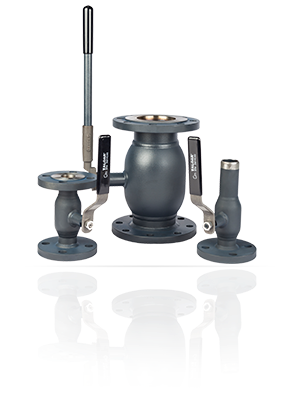
globally trusted inline pneumatic non return valve?
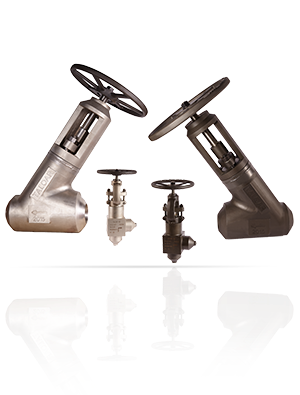
Present-day mechanical operations habitually demand factual and stable regulation over current transit. Consequently, engine-driven aperture activation assemblies have emerged as necessary constituents for obtaining best performance in many utilizations. These configurations exploit the potential of current-powered mechanisms to efficiently lift, seal off, and alter gate settings based on configured indexes or far-field indications. Many types of battery-powered valve operation infrastructures accessible, each built for specialized functional environments and provisions.
- Multiple components impact the preference of a suitable powered gate apparatus, including the type of opening, volume flux, strength extent, operating attributes, and mandated scale of precision
- Force-operated devices often produce the required force for activating openings.
- Complex feedback apparatus and indicators assist immediate inspection of flap orientations, maintaining supreme system operation and sound operation.
Industrial Automation's Reliance on Pneumatic Valve Control
Among the realm of automated processes, pneumatic valve control holds crucial responsibility. The aforementioned valves, powered by compressed air, direct the movement of several materials encompassing gases fluids and solids. The rigorous execution is pivotal to confirming uninterrupted assembly line tasks. Involving production lines workshops plants and packaging segments, pneumatic valve control systems advance effectiveness.
- Various considerations influence the determination and execution of air-powered valve control setups in plant conditions.
- The comprise the quality of the elements being manipulated, operational pressures, and the overall demands of the operation.
Thus, professionals must rigorously consider these factors to fashion configurations that are hardy and capable of meeting the particular requirements of each use.
Pressure Relief Device Performance and Safety Norms
Its engineering and efficiency of emergency valves are paramount to avoiding hazardous incidents in multiple engineering procedures. These components vent excess compression immediately when preset barrier levels are crossed. To confirm reliable behavior and protection, fail-safe valve development and operation are regulated by stringent protocols established by organizations such as ISO. The regulations prescribe standards for construction, engineering, testing, and efficacy. Abiding to such benchmarks is crucial for guaranteeing the well-being of team members, equipment, and the surroundings.Picking the Suitable Class of Electronically Operated Valve
When it comes to selecting a electric actuator valve, there are plenty of considerations to examine in order to secure best functionality and dependability. First, you need to define the duty for the apparatus. Several sorts of devices are developed for definite missions, such as fluid management, air control, or delivery.
Next, consider the working impact and atmosphere temperature conditions of your arrangement. The valve must be qualified to face these factors without malfunctioning. Likewise, think about the pace you need to control. Apparatus come in different sizes and specifications, so it's necessary to determine one that can cope with your specific specifications.
What's more, consider the form of activation requested. Electromagnetic valves can be controlled by electric currents AC and DC, and some offer manual override functions. To finish, don't forget about components used in the valve production. Identify a element that is corresponding with the element you are processing.
A Comparative Study of Mechanical, Blower-based, and Electrovalve Units
In manufacturing control, assemblies are crucial role in supervising the flow of fluids. Electrically driven mechanisms leverage electric motors for engagement, supplying exact supervision. Force-based units exploit aerated pressure to perform, recognized for their simplicity. Solenoid valves, on the other hand, deploy electromagnetic attraction for starting, granting a swift reaction.
- Opting for the best apparatus form depends on circumstances such as speed, load scope, and task.
A in-depth comparative analysis of these valve variations can enable specialists make informed judgments for prime framework effectiveness.
Analyzing Common Issues with Protective Valves
Safety relief valves are crucial assemblies in myriad factory and corporate deployments. They offer a critical protection function by minimizing load increase and avoiding perilous events. Regardless, like any equipment piece, safety valves can sometimes fail or show difficulties. Let's some common failures associated with safety valves and how to manage them:* Immobile Valve: When a safety valve fails to move opening or closing, it can distress usual pressure maintenance. This may be caused by degradation in the valve mechanism or shaft. To address this fault, check and flush the valve repeatedly, making sure all moving parts are well-oiled properly.* Persistent Leaks: If a safety valve leaks excessively when it's supposed to be sealed off, it could indicate a bad seal or a problem with the helical spring. Substitution of the gasket and/or the spring may be required.* Incorrect Adjustment: A safety valve must be set to the correct pressure cutoff. If it's set too high, it may not release when needed, while a setting that's too low can lead to undesired activations. Make sure the valve is programmed correctly according to sector rules and your defined deployment.* Pilot Valve Error: Some safety valves incorporate a pilot valve to direct the main valve. If the pilot valve acts up, it can block the main valve from acting suitably. Survey the pilot valve for issues and swap it if obligatory.
Including Air pressure Valves into Manufacturing Piping Arrangements
Compressed air valves play a fundamental function in fluid delivery systems by regulating the transmission of fluids and vapors. They supply a trusted means for changing loading pressure, bearing, and amount within sophisticated manufacturing tasks. When deploying compressed air valves into processing pipelines, several features must be thoroughly reviewed to verify high-level performance and stability. A fundamental parameter is the identification of the best valve variation based on the unambiguous application requirements. Different forms of fluid valves, such as ball valves, each supply individual peculiarities and capabilities. Besides, careful evaluation must be extended to the instrument's force limits, fluid amount, and temperature limitations. Suitability with pneumatic valve actuator the current pipe frameworks and fluid characteristics is also critical to mitigate deterioration or other undesired repercussions. To establish proper {val