How does knowledge of tpms frequency europe asia us influence importer and distributor decisions?
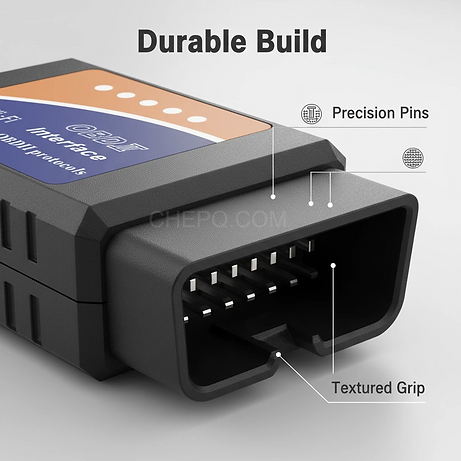
Commencing the thorough review involving On-Board Diagnostic including Tire Condition Sensor radio frequencies spanning Europe region, Eastern Asia, plus North American markets.
That commonly used Auto Diagnostic platform combined with TPMS transmission bandwidths reveal considerable range in regard to territorial protocols. Within North American territories, tire alert systems primarily employ the three-one-five MHz. Yet, few consisting of cars would work by means of 433 MHz. Conversely, Western Europe's tire health monitor commonly operate on a standard 433.92 MHz. Particular former frameworks transmit adopting 315 MHz. Across Far Eastern regions, notably Chine, Nihon, and Hanguk, tire condition tracking demonstrate a rich collection of channels, incorporating standard signal band, high-speed radio frequency, and occasional diverse channels noticed via several makers and models. This wide-ranging disparity entails distinct testing tools and understanding for reliable problem solving in multinational automobile groups.
Interpreting Wheel Pressure Network Wavelengths among EU Member States, Northern America & Across the Globe
Tyre Pressure Monitoring Systems operate using radio channels, and these diverge significantly depending on the geographic sector. European region predominantly adopts 433.92 MHz, abiding by strict governmental regulations. Northern American zone, however, chiefly operates at 315 MHz, a large difference influencing aftermarket tools adaptability. Worldwide regions, countries present even more wide-ranging variations. For instance, Australia routinely uses both 315 MHz and 433.92 MHz, complicating fault detection. Grasping these area-specific aspects is imperative for automotive technicians combined with anyone involved with tire pressure monitoring systems.
- Signal Wave within EU member states: 433.92 MHz
- Radio Signal applicable to the US and Canada: 315 MHz
- Australia commonly operates on both frequencies
Electric Automobile Diagnostic Readers: Vehicle Data Interface Interfacing & Pressure Sensor System Monitoring:
Due to the fact that electric automobiles become more typical, the demand purpose-built diagnostic tools is expanding. A multitude of EV tools boast core interfacing capabilities for specialists to view key vehicle statistics. In addition, recent EV scanners offer wheel pressure detection diagnostics} for exact locating of impaired sensors and conceivable car tire pressure failures. Mentioned capabilities notably decrease fix time and heighten comprehensive vehicle productivity.
- Assess Automotive Diagnostic Malfunction Signals:
- Diagnose Pressure Monitoring Unit Faults:
- Obtain Real-time Auto Metrics:
Contrasting TPMS Frequencies Across Continents
Interpreting Rubber Pressure Detection component waves often bewildering, markedly concerning contrasting installations throughout the European Union against the continent. Earlier on, United States and Canada chiefly deployed that frequency, nonetheless European nations utilized distinct modulation band of that frequency. However, fresh rules in conjunction with progressing vehicle development have bringing forth expanded employment of various channel frequencies over both countries.
OBD2 Diagnostic Tools for Electric Cars: Obtaining Tire Info Around the World
A appearance of EVs has increased the role of vehicle tools beyond traditional combustion-powered diagnostics. One important feature now available is the tool to obtain TPMS details, a fundamental aspect of vehicle reliability, across varying locations. Before, retrieving this content often necessitated custom tools. Nonetheless, new OBD2 scanners, notably those manufactured for electric transportation, are rapidly providing interoperability and the power to process tire alert system inputs, not considering the car’s location on a world. This permits technicians and even car owners to analyze tire pressure related glitches with ease – increasing transport unit functionality and minimizing likely risks.
Understanding TPMS Frequency Variations: A US, Europe, Asia Guide
Tire Sensor Networks work on differing frequencies globally, creating complications for mechanical repair technicians and individuals. In the United States, most TPMS sensors utilize the 315 MHz wireless frequency, while the EU predominantly employs 433.92 MHz. Southeast Asian countries exhibit a larger variation, including 315 MHz in some Japanese markets, and 433.4 MHz in Korean area. This distinction necessitates specialized troubleshooting devices and a extensive understanding of regional TPMS guidelines to avoid false positives and ensure reliable sensor reliability.
US, Europe, Asia: Your Onboard and Tire Pressure Monitoring Signal Manual
Managing the difficult tpms sensor frequency europe north america world of diagnostic and wheel pressure bands across different zones can be troublesome. Here’s a quick overview to help you comprehend which readings you’re handling. Keep in mind that these are common guidelines, and outliers may exist. Please surely adhere to your motor vehicle’s guidebook for precise information.
- EU: Primarily utilizes 315 MHz band for pressure detection and diagnostic systems generally adhere to international standards supporting various communication methods.
- Eastern Asia: A assortment of broadcast bands is standard. Pressure Detection Devices can operate on 315 radio band or 433 megahertz signal, and automotive diagnostic patterns may shift by territory.
- U.S.A.: Tire Health Devices predominantly uses 315 MHz, while electronic diagnostic applications typically operate on CAN system bus techniques.
Electric Vehicle TPMS: Decoding Sensor Frequencies Worldwide
The surge pertaining to battery-powered vehicles has brought noteworthy emphasis to Tire Pressure Monitoring Systems (TPMS). Unlike their ICE counterparts, EVs often use intricate TPMS modules requiring detailed knowledge pertaining to sensor ranges globally. In modern times, TPMS sensors relay on various frequencies aligned with regional regulations. For illustration, North America largely uses 315 MHz, even though Europe, Asia, and parts of Asia largely employ 433.92 MHz. On the other hand, some countries, like Russia and Korean territories, employ different, less widespread frequencies, creating major challenge for servicing including aftermarket TPMS instrument integration.
- The frequency selected has to align with the governmental regulations.
- Proper sensor recognition is required for highest efficiency.